

Locking pliers and wrenches are two commonly used tools in mechanical operation, maintenance, and processing, and they have certain differences in function, structure, and application scenarios.
1, Functional differences
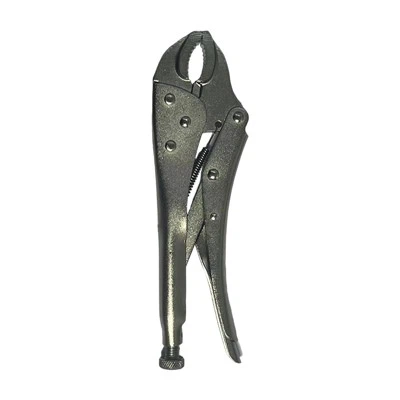
Locking pliers: The main function is to clamp and fix the workpiece, which can lock the workpiece and maintain its position stability, so that the workpiece will not be displaced during processing or assembly. The clamp of the locking pliers can be adjusted and tightened by itself, and the usage is very flexible.
Wrench: mainly used to tighten or loosen bolts, nuts and other fasteners. According to different designs, wrenches come in different shapes and sizes to accommodate bolts and nuts of different specifications and positions.
2, Structural differences
Locking pliers: usually have two movable jaws, which can clamp or release the workpiece by operating the handle. The jaw part may be equipped with special clamping structures or materials to improve clamping force and stability.
Wrench: The structure varies depending on the type. For example, open-end wrenches have adjustable opening widths to accommodate bolts and nuts of different sizes; The plum blossom wrench has a structure similar to a socket, which can be used to tighten or loosen the head of a bolt or nut.
3, Differences in application scenarios
Locking pliers: widely used in scenarios that require clamping and fixing workpieces, such as mechanical processing, assembly, maintenance, etc. Especially in situations where precise control of the workpiece position or prevention of workpiece movement is required, the role of locking pliers is particularly prominent.
Wrench: mainly used for tightening or loosening bolts and nuts, it is an indispensable tool in mechanical maintenance, equipment installation, disassembly and other work.
4, Summary
Locking pliers and wrenches have their own characteristics in terms of function, structure, and application scenarios. Locking pliers focus more on clamping and fixing workpieces, while wrenches focus more on tightening or loosening bolts and nuts. In practical use, appropriate tools should be selected according to specific job requirements. At the same time, attention should also be paid to the use of tools and precautions to ensure the safety and efficiency of work.
What Is The Difference Between Locking Pliers And Wrenches
Send Inquiry