Hey there! As a supplier of Slip Joint Pliers, I'm super stoked to chat with you about the ergonomic design of these awesome tools. Slip joint pliers are one of those must - have items in any toolbox, whether you're a DIY enthusiast or a professional tradesperson. So, let's dig into what makes their ergonomic design so special.
1. The Basics of Ergonomic Design
First off, what is ergonomic design anyway? Well, it's all about creating products that fit the human body's natural movements and capabilities. When it comes to tools like slip joint pliers, an ergonomic design aims to reduce user fatigue, prevent injuries, and make the tool easier to use over long periods.
Think about it. If you're using a pair of pliers to work on a project, you don't want your hands to start hurting after just a few minutes. That's where ergonomic design steps in. It takes into account factors like the shape of the handle, the force required to operate the tool, and how the tool feels in your hand.
2. Handle Shape and Grip
One of the most important aspects of the ergonomic design of slip joint pliers is the handle shape. The handles are usually contoured to fit the natural curve of your hand. This means that when you hold the pliers, your fingers and palm can rest comfortably on the handles without any awkward bends or pressure points.
For example, many modern slip joint pliers have a dual - material handle. The outer layer is often made of a soft, rubbery material that provides a good grip. This is great because it helps prevent the pliers from slipping out of your hand, especially if your hands are a bit oily or wet. The inner layer is usually a more rigid material that provides structural support.
The grip is also designed to be non - slip. Some pliers have textured handles, which give you extra traction when you're holding onto the tool. This is crucial when you're applying a lot of force to the pliers, like when you're tightening or loosening a nut. You don't want the pliers to suddenly slip and cause an accident.
3. Leverage and Force Distribution
Another key part of the ergonomic design is how the pliers handle leverage and force distribution. Slip joint pliers are designed to maximize the amount of force you can apply with minimal effort. The joint mechanism of the pliers is engineered in such a way that it allows you to adjust the position of the jaws to fit different sizes of objects.
When you're using the pliers, the force you apply is distributed evenly across the jaws. This means that you don't have to put all your strength into one small area, which can lead to hand fatigue. Instead, the force is spread out, making it easier to grip and manipulate objects.
For instance, if you're using the pliers to grip a pipe, the force is distributed along the length of the jaws, so you can hold the pipe firmly without having to squeeze too hard. This is a huge advantage, especially when you're working on projects that require a lot of repetitive gripping.
4. Reducing Vibration
Vibration can be a real pain when you're using hand tools. It can cause discomfort, fatigue, and even long - term health problems. That's why many slip joint pliers are designed to reduce vibration.
Some pliers have special shock - absorbing materials in the handles. These materials help dampen the vibrations that are generated when you're using the pliers. For example, when you're cutting through a wire or gripping a hard object, the shock - absorbing material in the handle will absorb some of the vibrations, making the tool more comfortable to use.
5. Compatibility with Different Tasks
Slip joint pliers are incredibly versatile tools, and their ergonomic design reflects this. They are designed to be used for a wide range of tasks, from gripping and holding to cutting and bending.
The jaws of the pliers are usually adjustable, which means you can use them on objects of different sizes. This is great because it allows you to have one tool that can do multiple jobs. And because the pliers are ergonomically designed, you can use them for all these different tasks without experiencing too much discomfort.
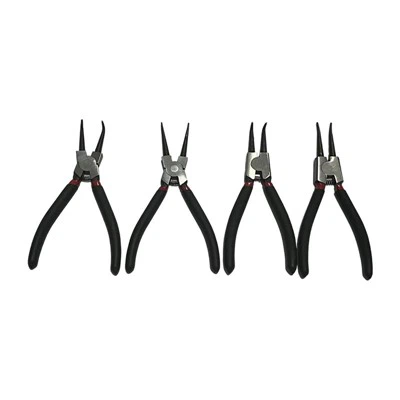
For example, if you're working on an electrical project, you can use the pliers to strip wires (check out Wire Stripping Pliers). The ergonomic design of the pliers makes it easy to grip the wire and apply the right amount of force to strip the insulation. If you need to work on a small, hard - to - reach area, you might want to check out Long Reach Flat Nose Plier, which also benefits from similar ergonomic principles. And if you're dealing with circlips, Circlip Pliers are a great option, and they too are designed with ergonomics in mind.
6. Comparing with Non - Ergonomic Designs
To really understand the benefits of ergonomic slip joint pliers, it's helpful to compare them with non - ergonomic designs. Non - ergonomic pliers often have straight, un - contoured handles that can be uncomfortable to hold for long periods. They may also have a less efficient joint mechanism, which means you have to apply more force to get the same job done.
For example, if you're using a non - ergonomic pair of pliers to grip a large nut, you might find that your hand starts to cramp up after just a few minutes. The lack of a proper grip and force distribution can make the task much more difficult and tiring.
On the other hand, ergonomic slip joint pliers make the job easier and more comfortable. You can work for longer periods without experiencing as much fatigue, and you're less likely to make mistakes due to discomfort or poor grip.
7. Long - Term Benefits
The ergonomic design of slip joint pliers isn't just about making the tool more comfortable to use in the short term. It also has long - term benefits for your health. Using non - ergonomic tools can lead to repetitive strain injuries, such as carpal tunnel syndrome and tendonitis.
By using ergonomic slip joint pliers, you're reducing the risk of these injuries. The even force distribution, reduced vibration, and comfortable grip all contribute to a healthier working environment. This is especially important for professionals who use hand tools on a daily basis.
8. Our Supplier Advantage
As a supplier of slip joint pliers, we take ergonomic design very seriously. We work with the latest technology and materials to ensure that our pliers are not only high - quality but also extremely comfortable to use.
Our pliers are tested rigorously to make sure they meet the highest standards of ergonomic design. We listen to our customers' feedback and continuously improve our products to make them even better.
Contact Us for Procurement
If you're in the market for high - quality, ergonomic slip joint pliers, we'd love to hear from you. Whether you're a small business looking to stock up on tools or an individual DIYer, we can provide you with the right products at competitive prices. Don't hesitate to reach out to us for procurement and let's start a great business relationship.


References
- "Ergonomics in Hand Tools Design" - Journal of Tool Manufacturing
- "The Impact of Ergonomic Design on User Fatigue in Hand Tools" - International Journal of Occupational Safety and Health