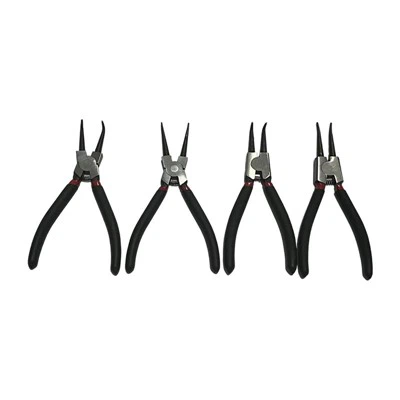
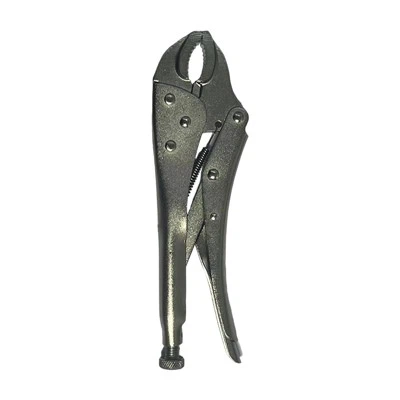
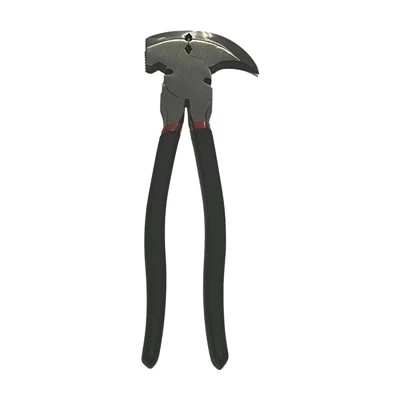
In the world of hand tools, pliers are indispensable for a wide range of tasks, from delicate electrical work to heavy - duty construction. Among the various types of pliers, American Type Bent Nose Pliers and straight - nose pliers stand out as two commonly used options. As a supplier of American Type Bent Nose Pliers, I am well - versed in the features and differences between these two types of pliers, and I'm excited to share this knowledge with you.
Design and Structure
The most obvious difference between American Type Bent Nose Pliers and straight - nose pliers lies in their nose design. Straight - nose pliers, as the name suggests, have a straight tip. This design provides a direct and linear approach to gripping and manipulating objects. The jaws of straight - nose pliers run parallel to the handles, allowing for a straightforward application of force. This makes them ideal for tasks where a direct line of sight and a straight - on grip are required.
On the other hand, American Type Bent Nose Pliers have a distinct bent tip. The bend is typically at an angle, which can vary depending on the specific model. This bent design offers unique advantages in terms of accessibility. It allows the user to reach into tight spaces or around obstacles that would be difficult to access with straight - nose pliers. For example, when working on a circuit board with densely packed components, the bent nose can navigate around other parts to grip or manipulate a specific wire or component.
Functionality
The functionality of these two types of pliers is closely related to their design. Straight - nose pliers are often used for general - purpose gripping and cutting tasks. They are great for holding small objects firmly, such as nails, screws, or wires. The straight jaws provide a stable and even grip, which is essential for tasks that require precision. In addition, many straight - nose pliers are equipped with cutting edges near the base of the jaws. These cutting edges can be used to snip through wires, cables, or thin metal sheets.
American Type Bent Nose Pliers, however, excel in tasks that demand access to hard - to - reach areas. In electronics work, they are frequently used for soldering. The bent tip can hold a wire in place while the user applies solder, even in cramped spaces on a circuit board. They are also useful in jewelry making, where they can be used to bend and shape small pieces of wire or to reach into the interior of a jewelry piece. Moreover, in automotive repair, the bent nose can access parts hidden behind other components, such as electrical connectors or small fasteners.
Grip and Control
When it comes to grip and control, both types of pliers have their own characteristics. Straight - nose pliers offer a more traditional and straightforward grip. The parallel jaws allow for a consistent and predictable application of force. This makes them easy to handle for tasks that require a firm and stable grip. The user can apply pressure evenly across the jaws, ensuring that the object being held does not slip.
American Type Bent Nose Pliers, while having a different shape, also provide excellent grip and control. The bent tip can be used to leverage objects in a way that is not possible with straight - nose pliers. The angle of the bend can be used to create a more efficient grip in certain situations. For example, when gripping a small object in a tight space, the bent nose can be positioned to provide a better mechanical advantage, allowing the user to hold the object more securely with less effort.
Applications in Different Industries
Electrical and Electronics
In the electrical and electronics industry, both types of pliers are widely used. Straight - nose pliers are used for basic wire handling tasks, such as stripping insulation, twisting wires together, and cutting wires to the appropriate length. They are also used for general - purpose assembly work, where they can hold small components in place during soldering or installation.
American Type Bent Nose Pliers, on the other hand, are essential for more detailed and intricate work. They are used for tasks such as desoldering, where the bent tip can reach under a component to remove the solder. They are also used for working on printed circuit boards (PCBs), where the ability to access tight spaces is crucial. For example, when replacing a small surface - mount component on a PCB, the bent nose can hold the new component in place while the user solders it.
Jewelry Making
In the jewelry - making industry, straight - nose pliers are used for general wire bending and shaping. They can be used to create simple loops and bends in wire, as well as to hold beads or other small jewelry components during assembly.
American Type Bent Nose Pliers are highly valued in jewelry making for their ability to reach into the interior of jewelry pieces. They can be used to create complex designs, such as bending wires into intricate shapes or adjusting the position of a gemstone in a setting. The bent tip allows for precise manipulation of small parts, which is essential for creating high - quality jewelry.
Automotive Repair
In automotive repair, straight - nose pliers are used for tasks such as removing or installing clips, holding small parts during disassembly or assembly, and cutting zip ties. They are a staple in any automotive mechanic's toolbox for general - purpose gripping and cutting.

American Type Bent Nose Pliers are useful for accessing parts that are hidden behind other components. For example, when working on the electrical system of a car, the bent nose can reach into tight spaces to grip or disconnect electrical connectors. They are also used for tasks such as adjusting small springs or clips that are located in hard - to - reach areas.
Comparison with Other Types of Pliers
It's also worth comparing American Type Bent Nose Pliers and straight - nose pliers with other types of pliers. For example, German Type Flat Nose Pliers have flat jaws, which are designed for tasks such as flattening or bending metal. They are often used in metalworking and jewelry making. The flat jaws provide a large surface area for applying pressure, which is different from the focused grip of straight - nose and bent - nose pliers.
Germany Type Heavy Duty Diagonal Cutting Pliers are primarily designed for cutting. They have sharp, diagonal cutting edges that can easily cut through thick wires, cables, and even some metals. While straight - nose pliers may have cutting edges, they are not as specialized for heavy - duty cutting as diagonal cutting pliers.
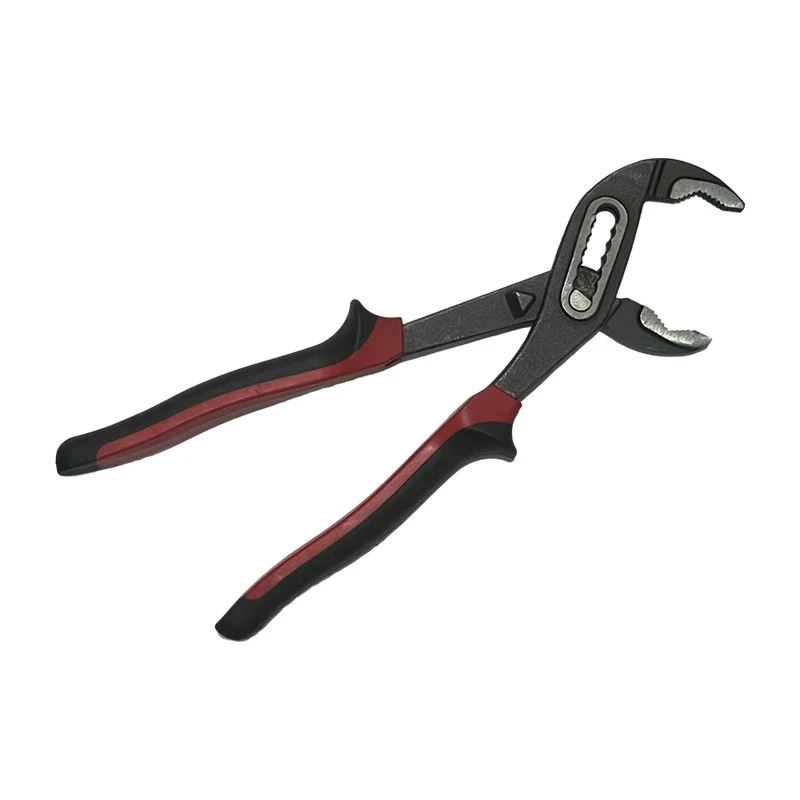
Adjustable Water Pump Pliers have an adjustable jaw width, which allows them to grip objects of different sizes. They are commonly used in plumbing and automotive repair for tasks such as tightening or loosening nuts and bolts. Their adjustable feature sets them apart from the fixed - jaw design of straight - nose and bent - nose pliers.
Why Choose American Type Bent Nose Pliers from Us
As a supplier of American Type Bent Nose Pliers, we offer high - quality products that are designed to meet the needs of various industries. Our pliers are made from durable materials, ensuring long - lasting performance. The precision - engineered bent tip provides excellent access to tight spaces, and the grip is designed for comfort and control.
Whether you are an electronics technician, a jewelry maker, or an automotive mechanic, our American Type Bent Nose Pliers can enhance your work efficiency and quality. We understand the importance of having reliable tools in your toolkit, and we are committed to providing products that meet the highest standards.
If you are interested in purchasing American Type Bent Nose Pliers for your business or personal use, we encourage you to get in touch with us. We can provide you with more information about our products, including specifications, pricing, and availability. Our team of experts is ready to assist you in finding the right pliers for your specific needs. Contact us today to start a procurement discussion and take your work to the next level.
References
- "Hand Tools for the Trades" by Jim Tolpin
- "The Complete Guide to Pliers and Their Uses" by Tooling Insights Magazine