Hey there! As a supplier of American Type Flat Nose Pliers, I often get asked a pretty common question: "Do American Type Flat Nose Pliers have a smooth or serrated jaw?" Well, let's dive right into it and find out.
First off, let's talk about what American Type Flat Nose Pliers are. These pliers are a staple in many toolkits, both for professionals and DIY enthusiasts. They're designed with a flat, parallel jaw that's perfect for gripping, bending, and shaping various materials like wire, metal sheets, and even jewelry components.
Now, the big question: smooth or serrated jaws? It really depends on what you're planning to use the pliers for.
Smooth Jaws
Smooth jaws on American Type Flat Nose Pliers have their own set of advantages. When you need to work on delicate materials, smooth jaws are your best bet. They won't leave any marks or scratches on the surface of the material you're handling. For example, if you're into jewelry making and you're working with precious metals like gold or silver, smooth jaws will ensure that the finish of the metal remains pristine. You can bend and shape the wire without worrying about it getting marred by serrations.
Another benefit of smooth jaws is that they provide a more even pressure distribution. When you're gripping an object, the smooth surface allows for a consistent hold across the entire contact area. This is especially important when you're working on projects that require precision, like electrical work. You can grip small wires firmly without accidentally cutting or damaging them.
Serrated Jaws
On the other hand, serrated jaws offer a different set of benefits. The serrations provide extra grip, which is extremely useful when you're working with slippery or round objects. If you're trying to hold onto a small metal rod or a wire that keeps slipping out of your grasp, serrated jaws will give you the traction you need.


Serrated jaws are also great for tasks that involve more force. For example, if you're bending thick wires or shaping heavy-duty metal components, the serrations help prevent the material from slipping while you apply pressure. This makes the job easier and more efficient.
Which One Should You Choose?
So, how do you decide whether to go for smooth or serrated jaws? It all comes down to your specific needs. If you're mainly working on delicate projects where the appearance of the material matters, smooth jaws are the way to go. But if you're dealing with more rugged tasks that require a strong grip, serrated jaws are probably better suited for you.
In some cases, you might even find it useful to have both types of pliers in your toolkit. That way, you're prepared for any job that comes your way.
Other Types of Pliers You Might Need
While we're on the topic of pliers, I'd like to mention a few other types that you might find useful. Check out these links for more information:
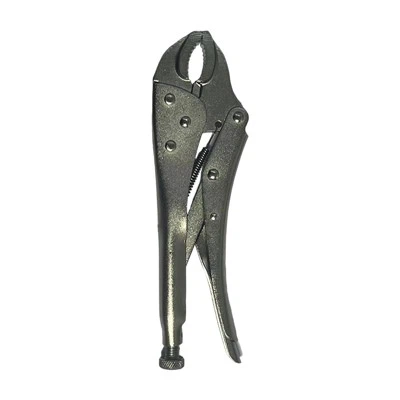
- Locking Grip Plier: These pliers have a locking mechanism that allows you to keep a constant grip on an object without having to apply continuous pressure. They're great for holding things in place while you work on other parts of a project.
- German Type End Cutting Pliers: These pliers are designed for cutting wires and cables close to the surface. They have a sharp cutting edge that makes clean, precise cuts.
- Long Reach Nose Plier: As the name suggests, these pliers have a long, narrow nose that allows you to reach into tight spaces. They're perfect for working on projects where access is limited.
Why Choose Our American Type Flat Nose Pliers?
As a supplier, we take pride in offering high-quality American Type Flat Nose Pliers. Our pliers are made from durable materials that can withstand heavy use. Whether you choose smooth or serrated jaws, you can be sure that our pliers will provide a reliable grip and long-lasting performance.
We also offer a wide range of sizes and styles to meet your specific needs. Whether you're a professional tradesperson or a hobbyist, we have the right pliers for you.
Let's Get in Touch
If you're interested in purchasing our American Type Flat Nose Pliers or any of our other hand tools, we'd love to hear from you. We're always happy to answer any questions you might have and help you find the right tools for your projects. So, don't hesitate to reach out and start a conversation. We're here to make your tool shopping experience as easy and enjoyable as possible.
References
- Plier Handbook: A Guide to Different Types of Pliers and Their Uses. (2023). Hand Tool Publishing.
- Toolsmith Magazine. (2022). The Importance of Choosing the Right Pliers for the Job.