German type flat nose pliers are a staple in many toolkits, known for their versatility and precision. As a supplier of these high - quality pliers, I often get asked whether they can be used for leatherworking. In this blog, I'll delve into the characteristics of German type flat nose pliers and assess their suitability for leather projects.
Understanding German Type Flat Nose Pliers
German type flat nose pliers are renowned for their robust construction and fine - tuned design. They typically feature a flat, parallel jaw surface that extends from the tip to the base of the jaws. This design allows for a wide range of gripping and manipulating tasks. The jaws are usually made from high - carbon steel, which is heat - treated to ensure durability and resistance to wear. The handles are ergonomically designed to provide a comfortable grip, reducing hand fatigue during extended use.
Leatherworking Requirements
Leatherworking encompasses a variety of tasks, from cutting and shaping leather to attaching hardware and creating decorative elements. Different tools are required for different stages of the leatherworking process. For instance, when it comes to cutting, sharp knives or Cutting Pliers Set are essential. When attaching hardware such as rivets or snaps, specialized setting tools are often used. However, there are certain aspects of leatherworking where pliers can play a crucial role.
Potential Uses of German Type Flat Nose Pliers in Leatherworking
1. Bending and Shaping Leather
One of the primary functions of German type flat nose pliers in leatherworking is bending and shaping leather. Leather can be quite stiff, especially thicker varieties, and sometimes needs to be bent into specific shapes for projects like wallets, belts, or holsters. The flat jaws of the pliers can be used to grip the leather firmly and apply pressure to bend it at a precise angle. For example, when creating a curved edge on a leather wallet, the pliers can be used to hold the leather in place while it is being shaped over a form.
2. Manipulating Leather Hardware
Leather projects often involve the use of various types of hardware, such as buckles, rings, and clasps. German type flat nose pliers can be used to manipulate this hardware. They can be used to open and close small rings or clasps, ensuring a secure fit. When attaching a buckle to a belt, the pliers can be used to grip the buckle's prongs and bend them slightly to fit through the leather holes more easily.


3. Holding Pieces in Place
During the assembly of leather projects, it is often necessary to hold pieces of leather together while they are being glued, stitched, or riveted. The flat nose pliers can act as a temporary clamp, holding the pieces firmly in place. This is especially useful when working with small or delicate parts that are difficult to hold by hand. For example, when attaching a small leather patch to a larger piece, the pliers can keep the patch in position until the adhesive dries.
Limitations of German Type Flat Nose Pliers in Leatherworking
1. Cutting Leather
German type flat nose pliers are not designed for cutting leather. Their jaws are not sharp enough to cleanly sever leather fibers. Attempting to cut leather with these pliers will result in a ragged and uneven cut. For cutting leather, it is recommended to use proper Cutting Pliers Set or leather - cutting knives.
2. Precision Stitching
When it comes to precision stitching in leatherworking, German type flat nose pliers may not be the best tool. Stitching requires a high level of control and delicate handling of the needle and thread. The pliers are relatively large and bulky, making it difficult to maneuver them in tight spaces and perform fine - detailed stitching work. Specialized leather - stitching tools are better suited for this task.
Comparing with Other Pliers for Leatherworking
In addition to German type flat nose pliers, there are other types of pliers that are commonly used in leatherworking. American Type Long Nose Pliers are another popular choice. These pliers have long, tapered jaws that are ideal for reaching into tight spaces and gripping small objects. They are often used for tasks such as threading small rings or working on intricate leatherwork details.
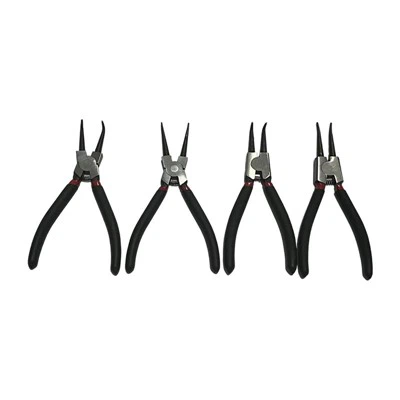
Circlip Pliers are also useful in leatherworking, especially when dealing with circlips or retaining rings. These pliers are designed to open and close circlips with ease, which can be used in leather projects that involve mechanical components.
Conclusion
In conclusion, German type flat nose pliers can be a useful tool in leatherworking, especially for tasks such as bending and shaping leather, manipulating hardware, and holding pieces in place. However, they have their limitations and are not suitable for all aspects of leatherworking, such as cutting and precision stitching. When combined with other specialized leatherworking tools, German type flat nose pliers can enhance the efficiency and quality of leather projects.
If you are involved in leatherworking or any other craft that requires high - quality pliers, I encourage you to consider our German type flat nose pliers. Our pliers are made with the highest standards of quality and craftsmanship, ensuring durability and performance. Whether you are a professional leatherworker or a hobbyist, our pliers can be a valuable addition to your toolkit. If you are interested in purchasing our German type flat nose pliers or have any questions about their suitability for your projects, please feel free to contact us for further discussion and procurement negotiation.
References
- Leatherworking Handbook: A Comprehensive Guide to Leather Crafts.
- Tool Manufacturing Standards and Best Practices in Germany.