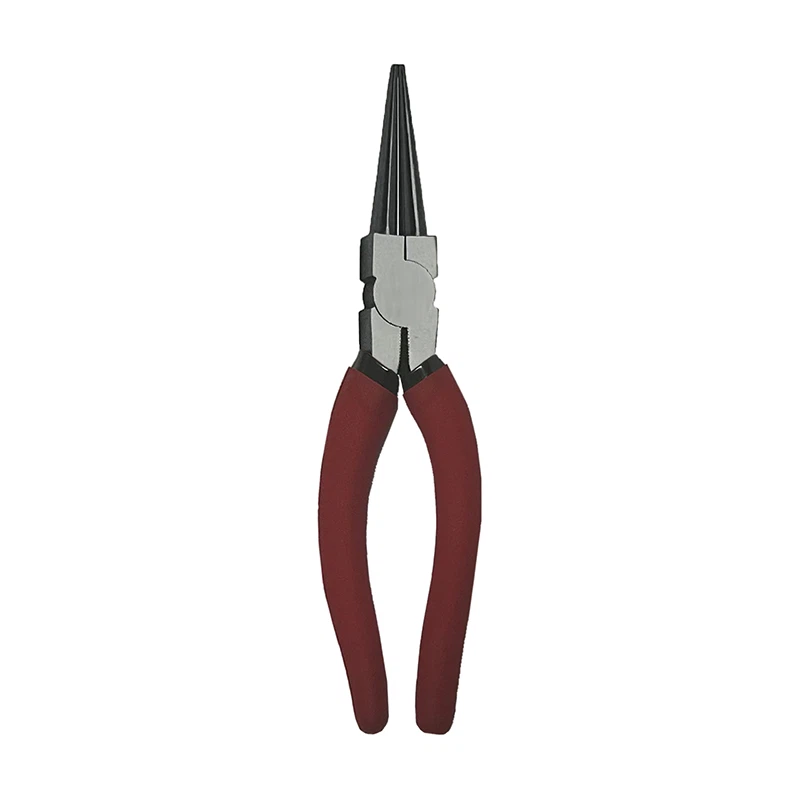
As a supplier of German Type Round Nose Pliers, I've encountered numerous inquiries regarding the hardness of these essential hand tools. In this blog, I'll delve into the concept of hardness, its significance for German Type Round Nose Pliers, and how it impacts their performance.
Understanding Hardness in Tools
Hardness is a fundamental property of materials, defined as the resistance of a material to deformation, indentation, or scratching. In the context of hand tools like German Type Round Nose Pliers, hardness plays a crucial role in determining their durability, wear resistance, and overall functionality.
There are several methods to measure hardness, with the Rockwell and Brinell scales being the most commonly used in the tool industry. The Rockwell scale measures the depth of penetration of an indenter under a specific load, while the Brinell scale measures the diameter of the indentation made by a hard ball under a known load. These scales provide numerical values that allow manufacturers and users to compare the hardness of different materials.
The Importance of Hardness in German Type Round Nose Pliers
German Type Round Nose Pliers are designed for a variety of tasks, including jewelry making, electrical work, and general crafting. The hardness of the jaws directly affects their ability to perform these tasks effectively.
- Durability: A high - hardness jaw material can withstand repeated use without significant wear or deformation. This means that the pliers will maintain their shape and functionality over a longer period, reducing the need for frequent replacements. For example, when bending and shaping wire in jewelry making, the jaws need to remain sharp and precise. If the jaws are too soft, they may become dull or misshapen, resulting in poor - quality work.
- Wear Resistance: The jaws of German Type Round Nose Pliers are constantly in contact with various materials, such as metal wires, cables, and small components. A hard jaw material resists abrasion and wear, ensuring that the pliers can handle different materials without losing their cutting or gripping ability. This is particularly important when working with tough or abrasive materials.
- Gripping Power: Hard jaws provide better gripping power. They can firmly hold objects without slipping, which is essential for tasks that require precision and control. Whether you're holding a small bead in jewelry making or a wire in electrical work, a good grip ensures that the object stays in place, making the task easier and more efficient.
Factors Affecting the Hardness of German Type Round Nose Pliers
The hardness of the jaws of German Type Round Nose Pliers is influenced by several factors, including the choice of material and the heat - treatment process.
- Material Selection: High - quality German Type Round Nose Pliers are typically made from carbon steel or alloy steel. Carbon steel contains a certain percentage of carbon, which increases its hardness. Alloy steel, on the other hand, has additional elements such as chromium, vanadium, or molybdenum, which further enhance its hardness, strength, and corrosion resistance. For example, chrome - vanadium steel is a popular choice for high - performance pliers due to its excellent combination of hardness and toughness.
- Heat Treatment: Heat treatment is a critical process in determining the hardness of the pliers' jaws. It involves heating the steel to a specific temperature and then cooling it at a controlled rate. Different heat - treatment methods, such as quenching and tempering, can be used to achieve the desired hardness. Quenching rapidly cools the heated steel, making it very hard but also brittle. Tempering is then used to reduce the brittleness and improve the toughness of the steel, resulting in a balanced combination of hardness and flexibility.
Comparing with Other Types of Pliers
It's interesting to compare the hardness of German Type Round Nose Pliers with other types of pliers, such as American Type Flat Nose Pliers and American Type Round Nose Plier.
American Type Flat Nose Pliers are often used for flattening and bending tasks. While they also require a certain level of hardness for durability and gripping power, their design and application may not demand the same extreme hardness as German Type Round Nose Pliers in some cases. American Type Round Nose Pliers, on the other hand, have similar applications to German Type Round Nose Pliers but may have different hardness characteristics depending on the manufacturing process and material selection.
How to Assess the Hardness of German Type Round Nose Pliers
As a supplier, I understand that customers may want to assess the hardness of the pliers they are purchasing. While it's not practical for most users to perform laboratory - level hardness tests, there are some simple ways to get an idea of the pliers' quality.
- Visual Inspection: A well - made pair of German Type Round Nose Pliers with hard jaws will have a smooth, even finish. There should be no visible signs of soft spots, such as indentations or scratches that are too easy to make.
- Function Test: Try using the pliers on a small piece of wire or material. If the jaws grip firmly and can perform the intended task without slipping or deforming, it's a good indication of adequate hardness. However, this is a very basic test and may not provide a precise measure of hardness.
Conclusion
The hardness of the jaws of German Type Round Nose Pliers is a critical factor that determines their performance, durability, and usability. As a supplier, I take great care in selecting the right materials and applying the appropriate heat - treatment processes to ensure that our pliers meet the highest standards of quality.
If you're in the market for high - quality German Type Round Nose Pliers, click here to explore our range of products. Our pliers are designed to provide excellent performance and long - lasting durability for all your crafting, electrical, and jewelry - making needs. Whether you're a professional or a hobbyist, we're confident that our German Type Round Nose Pliers will meet your expectations. If you have any questions or would like to discuss your specific requirements, please don't hesitate to reach out. We're here to assist you in finding the perfect tool for your projects.

References
- Callister, W. D., & Rethwisch, D. G. (2011). Materials Science and Engineering: An Introduction. Wiley.
- ASM Handbook Committee. (1990). ASM Handbook Volume 1: Properties and Selection: Irons, Steels, and High - Performance Alloys. ASM International.