In the world of hand tools, pliers are indispensable for a wide range of tasks, from simple household repairs to complex industrial operations. Two types of pliers that often come up in discussions are adjustable water pump pliers and locking pliers. As a supplier of adjustable water pump pliers, I am frequently asked about the differences between these two types of tools. In this blog post, I will delve into the distinct features, functions, and applications of adjustable water pump pliers and locking pliers, helping you make an informed decision when choosing the right tool for your needs.
Design and Structure
Adjustable water pump pliers, also known as groove-joint pliers, are characterized by their adjustable jaws. These pliers typically have a pivot point near the base of the jaws, and a series of grooves on the handle that allow the user to adjust the jaw opening to fit different sizes of objects. The jaws are usually serrated to provide a better grip on the workpiece. The design of adjustable water pump pliers makes them versatile and suitable for a variety of tasks where different sizes of objects need to be held or turned.
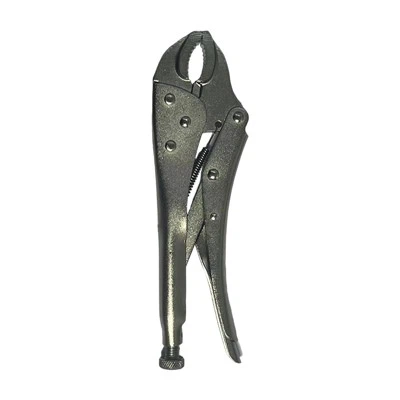
On the other hand, locking pliers, also referred to as Vise-Grips, have a unique locking mechanism. They feature a handle that can be adjusted to set the desired jaw opening, and a trigger or lever that, when engaged, locks the jaws in place. This locking feature allows the pliers to maintain a constant grip on the workpiece without the need for the user to apply continuous pressure. The jaws of locking pliers can come in various shapes, such as flat, curved, or serrated, depending on the intended application.
Functionality
The primary function of adjustable water pump pliers is to provide a firm grip on objects of different sizes. They are commonly used for tasks such as tightening or loosening nuts and bolts, gripping pipes, and holding irregularly shaped objects. The adjustable nature of the jaws allows the user to quickly adapt the pliers to different workpieces, making them a versatile tool for general-purpose use.
Locking pliers, on the other hand, are designed to provide a secure and constant grip on the workpiece. Once the jaws are locked in place, they can hold the object firmly without the need for the user to maintain pressure on the handles. This makes locking pliers ideal for tasks where a hands-free operation is required, such as holding a workpiece in place while soldering, welding, or performing other tasks that require both hands. Additionally, the locking feature of these pliers can be used to apply a large amount of force, making them suitable for tasks that require heavy-duty gripping.
Applications
Adjustable water pump pliers are widely used in plumbing, automotive repair, and general household maintenance. In plumbing, they are used for tightening or loosening pipe fittings, gripping pipes during installation or removal, and holding various plumbing components in place. In automotive repair, adjustable water pump pliers can be used for tasks such as removing or installing radiator hoses, tightening or loosening battery terminals, and working on other small components. At home, they are handy for a variety of tasks, such as fixing furniture, assembling DIY projects, and performing general repairs.
Locking pliers have a broader range of applications due to their unique locking feature. They are commonly used in metalworking, woodworking, and electrical work. In metalworking, locking pliers can be used to hold metal pieces together during welding or brazing, or to bend and shape metal components. In woodworking, they can be used to clamp pieces of wood together during glue-ups or to hold small parts in place while working on them. In electrical work, locking pliers can be used to hold wires in place during soldering or to strip insulation from wires.
Advantages and Disadvantages
Adjustable water pump pliers offer several advantages. Their adjustable jaws make them versatile and suitable for a wide range of tasks. They are relatively easy to use and require minimal training. Additionally, they are generally more affordable than locking pliers, making them a cost-effective option for home users and DIY enthusiasts. However, one of the disadvantages of adjustable water pump pliers is that they require the user to maintain pressure on the handles to keep the jaws closed. This can be tiring during prolonged use, and it may also result in a less secure grip compared to locking pliers.
Locking pliers have their own set of advantages. The locking mechanism provides a secure and constant grip on the workpiece, allowing for hands-free operation. This makes them ideal for tasks that require both hands or for applications where a large amount of force needs to be applied. Locking pliers are also available in a variety of sizes and jaw configurations, making them suitable for different types of workpieces. However, locking pliers are generally more expensive than adjustable water pump pliers, and they may be more complex to use, especially for beginners. Additionally, the locking mechanism can sometimes be difficult to disengage, which can be frustrating if the pliers need to be removed quickly.
Complementary Tools
While adjustable water pump pliers and locking pliers have their own unique features and applications, they can also be used together to complement each other. For example, adjustable water pump pliers can be used to initially grip and hold an object, while locking pliers can be used to provide a more secure and long-term hold. In some cases, adjustable water pump pliers can be used to adjust the position of a workpiece, and then locking pliers can be used to lock it in place.
If you are interested in exploring other types of pliers, you may also want to check out our Locking Grip Plier, Long Reach Bent Nose Plier, and German Type Flat Nose Pliers. These pliers offer different features and applications, and they can be a valuable addition to your tool collection.
Conclusion
In conclusion, adjustable water pump pliers and locking pliers are two distinct types of pliers with their own unique features, functions, and applications. Adjustable water pump pliers are versatile and suitable for general-purpose tasks, while locking pliers are designed for tasks that require a secure and constant grip. Understanding the differences between these two types of pliers can help you choose the right tool for your specific needs.
As a supplier of adjustable water pump pliers, I am committed to providing high-quality tools that meet the needs of our customers. If you are interested in purchasing adjustable water pump pliers or have any questions about our products, please feel free to contact us. We would be happy to discuss your requirements and assist you in finding the right tools for your projects.


References
- "Hand Tools: A Complete Guide to Selection and Use" by Albert A. Hoffman
- "The Tool Book: A Guide to the American Craftsman's Bench" by George R. Walker
- Various industry publications and online resources on hand tools and their applications.