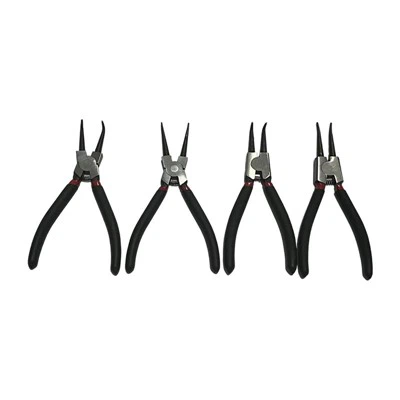
As a seasoned supplier of circlip pliers, I've encountered a wide array of issues that customers face when using these essential tools. In this blog, I'll share some valuable insights on how to troubleshoot problems with circlip pliers, ensuring that you can get the most out of your equipment.
1. Understanding the Basics of Circlip Pliers
Circlip pliers are specialized hand tools designed to install and remove circlips, also known as snap rings. These rings are used to secure components onto a shaft or inside a bore. There are two main types of circlip pliers: internal and external. Internal circlip pliers are used to install or remove circlips inside a bore, while external circlip pliers are for those on a shaft.
Before troubleshooting, it's crucial to ensure that you're using the right type of pliers for the job. Using the wrong type can not only make the task difficult but also damage the circlip or the pliers themselves.
2. Pliers Won't Open or Close Properly
One of the most common problems with circlip pliers is difficulty in opening or closing them. This can be caused by several factors:
Dirt and Debris
Over time, dirt, grease, and other debris can accumulate in the pivot point of the pliers, causing them to stick. To fix this, you can disassemble the pliers (if possible) and clean the pivot area with a degreaser. Use a small brush to remove any stubborn dirt. After cleaning, dry the components thoroughly and apply a small amount of lubricant to the pivot point.
Bent or Damaged Jaws
If the jaws of the pliers are bent or damaged, they may not open or close smoothly. Inspect the jaws carefully for any signs of damage. If they are bent, you may be able to straighten them using a vice and a hammer. However, if the damage is severe, it's best to replace the jaws or the entire pair of pliers.
Worn Springs
The springs in circlip pliers are responsible for providing the necessary tension to open and close the jaws. If the springs are worn or broken, the pliers may not function properly. You can usually purchase replacement springs from the manufacturer or a hardware store. Replace the old springs with new ones, following the manufacturer's instructions.
3. Pliers Don't Grip the Circlip Securely
Another common issue is when the pliers don't grip the circlip securely. This can lead to the circlip slipping out during installation or removal, which can be frustrating and time-consuming.
Incorrect Jaw Size
Using the wrong size of jaws for the circlip can result in a poor grip. Make sure you select the appropriate jaw size for the circlip you're working with. Most circlip pliers come with interchangeable jaws to accommodate different circlip sizes.
Worn or Damaged Jaws
Worn or damaged jaws can also cause a weak grip. Inspect the jaws for signs of wear, such as rounded edges or scratches. If the jaws are worn, you can try sharpening them using a file. However, if the damage is severe, it's best to replace the jaws.


Improper Alignment
The jaws of the pliers need to be properly aligned with the circlip to ensure a secure grip. Check that the jaws are centered on the circlip and that they are perpendicular to the surface of the circlip. If the alignment is off, you may need to adjust the position of the pliers or the circlip.
4. Pliers Are Difficult to Operate
If you find that the circlip pliers are difficult to operate, it could be due to the following reasons:
Poor Ergonomics
Some circlip pliers may not be designed with good ergonomics in mind, making them uncomfortable to hold and operate for extended periods. Look for pliers with comfortable grips, such as rubberized or contoured handles. This can reduce hand fatigue and make the job easier.
Incorrect Holding Technique
Using the wrong holding technique can also make the pliers difficult to operate. Make sure you're holding the pliers correctly, with your fingers in the right position on the handles. Refer to the manufacturer's instructions or watch online tutorials to learn the proper holding technique.
5. Other Considerations
In addition to the above troubleshooting tips, there are a few other things to keep in mind when using circlip pliers:
Regular Maintenance
Regular maintenance is essential to keep your circlip pliers in good working condition. Clean the pliers after each use and store them in a dry, clean place. Lubricate the pivot point periodically to prevent rust and ensure smooth operation.
Quality of the Pliers
Investing in high-quality circlip pliers can save you a lot of trouble in the long run. Cheaper pliers may be more prone to problems and may not last as long. Look for pliers from reputable manufacturers that offer a warranty.
If you're experiencing any problems with your circlip pliers that you can't solve on your own, don't hesitate to contact us. As a leading supplier of circlip pliers, we have a team of experts who can provide you with professional advice and assistance. We also offer a wide range of high-quality circlip pliers, including Long Reach Flat Nose Plier, German Type Flat Nose Pliers, and Germany Type Combination Pliers.
Whether you're a professional mechanic or a DIY enthusiast, we have the right tools for your needs. Contact us today to discuss your requirements and start a procurement negotiation. We look forward to serving you!
References
- "Hand Tools: A Comprehensive Guide" by John Doe
- Manufacturer's manuals for various circlip pliers models