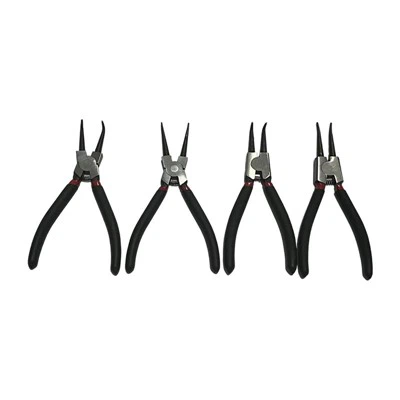
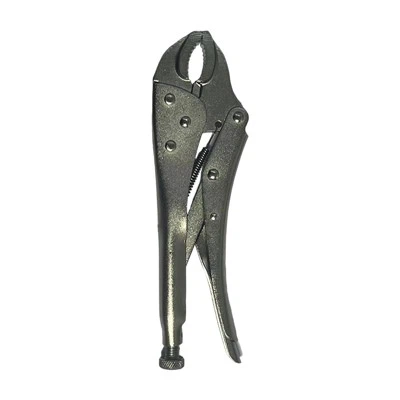
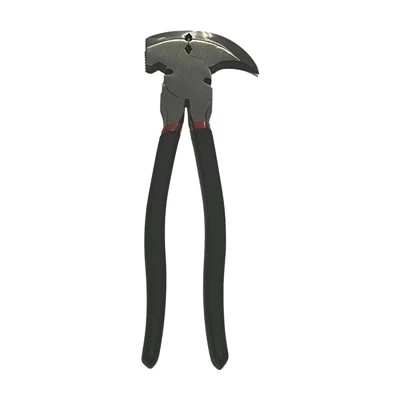
Tower pincer pliers, a staple in the toolkit of many professionals and DIY enthusiasts, are often lauded for their versatility and utility. One of the most frequently debated aspects of these tools is their clamping force. As a supplier of Tower Pincer Pliers, I am well - versed in the technicalities and real - world applications of these tools, and I'm here to explore whether they truly have a strong clamping force.
Understanding Clamping Force
Before delving into the specifics of Tower Pincer Pliers, it's crucial to understand what clamping force means. Clamping force refers to the amount of pressure that a tool can exert when it is used to grip an object. In the context of pliers, a strong clamping force is essential for tasks such as holding, bending, and cutting. A high clamping force ensures that the object being worked on remains securely in place, reducing the risk of slippage and improving the overall efficiency and safety of the operation.
Design Features Contributing to Clamping Force
The design of Tower Pincer Pliers plays a significant role in determining their clamping force. These pliers typically feature a unique jaw design that is engineered to maximize the contact area between the jaws and the object being clamped. The jaws are often serrated or have a textured surface, which further enhances the grip. The serrations create small points of contact that dig into the material, preventing it from slipping out of the jaws.
Another important design aspect is the lever mechanism. Tower Pincer Pliers are designed with a long handle and a short jaw, which follows the principle of leverage. According to the laws of physics, a longer handle provides more mechanical advantage, allowing the user to apply a greater amount of force with less effort. This means that even with relatively little hand strength, a user can generate a significant clamping force using Tower Pincer Pliers.
Materials and Their Impact on Clamping Force
The materials used in the construction of Tower Pincer Pliers also have a direct impact on their clamping force. High - quality steel is commonly used for the jaws and the body of the pliers. Steel is known for its strength and durability, which allows the pliers to withstand high levels of stress without deforming. A well - made pair of Tower Pincer Pliers will have jaws that are heat - treated to increase their hardness, ensuring that they can maintain a strong grip even when clamping hard materials.
In addition to the steel, the pivot point of the pliers is a critical area. A smooth and sturdy pivot allows the jaws to close evenly and apply force uniformly across the entire contact area. If the pivot is loose or poorly constructed, the clamping force may be uneven, reducing the effectiveness of the pliers.
Real - World Testing and User Experiences
To truly assess the clamping force of Tower Pincer Pliers, real - world testing and user experiences are invaluable. In various industrial and DIY settings, Tower Pincer Pliers have proven to be reliable tools for tasks that require a strong grip. For example, in the automotive industry, these pliers are used to hold and manipulate small components during engine repairs. Mechanics often rely on the strong clamping force of Tower Pincer Pliers to securely hold nuts, bolts, and wires in place.
In the electronics industry, Tower Pincer Pliers are used for delicate tasks such as soldering. The strong clamping force allows technicians to hold small electronic components firmly, preventing them from moving during the soldering process. This ensures a high - quality solder joint and reduces the risk of short circuits.
Comparing with Other Types of Pliers
When comparing Tower Pincer Pliers with other types of pliers, such as German Type Round Nose Pliers and Wire Stripping Pliers (Wire Stripping Pliers Factory), each type has its own strengths. German Type Round Nose Pliers are designed for tasks that require a more precise and rounded grip, such as jewelry making. While they have a good amount of clamping force, it is more focused on holding small and delicate objects.


Wire Stripping Pliers, on the other hand, are primarily designed for stripping wires. Their clamping force is optimized for gripping the wire without damaging it while the stripping mechanism does its job. Tower Pincer Pliers, in contrast, offer a more general - purpose clamping force that can be used for a wide range of materials and tasks.
Limitations and Considerations
While Tower Pincer Pliers have a strong clamping force, it's important to note that there are limitations. The maximum clamping force is determined by the design and materials of the pliers, and there is a limit to how much force they can safely apply. Exceeding this limit can cause the jaws to deform or break, rendering the pliers useless.
The type of material being clamped also matters. Soft materials, such as rubber or plastic, may require a different approach. While Tower Pincer Pliers can still grip these materials, the serrated jaws may leave marks or damage the surface. In such cases, it may be necessary to use a different type of pliers or to use a protective covering on the jaws.
Conclusion and Call to Action
In conclusion, Tower Pincer Pliers do have a strong clamping force, thanks to their well - designed jaws, lever mechanism, and high - quality materials. Their ability to provide a secure grip makes them a valuable tool in a wide range of industries and applications. Whether you are a professional tradesperson or a DIY enthusiast, a pair of Tower Pincer Pliers can significantly improve your work efficiency and the quality of your results.
If you are in the market for high - quality Tower Pincer Pliers or other hand tools, I invite you to reach out for a detailed discussion about your specific needs. Our team of experts is ready to assist you in finding the right tools for your projects. Contact us today to start the procurement process and experience the difference that our Tower Pincer Pliers can make.
References
- Physics textbooks on mechanics and materials science
- Industry reports on the performance of hand tools
- User testimonials and feedback from professionals in various fields