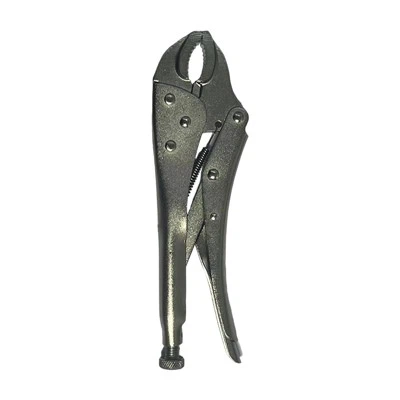
Do locking grip pliers have a locking mechanism? This is a question that many people in the industry often ask. As a long - time supplier of Locking Grip Plier, I am more than happy to delve into this topic and provide a comprehensive answer.
Understanding Locking Grip Pliers
Locking grip pliers, also known as Vise - Grip pliers, are a type of hand tool widely used in various industries, including automotive repair, plumbing, and general construction. Their unique design allows them to hold objects firmly, providing a strong grip that can withstand significant force. But what makes them truly stand out is their locking mechanism.
The Locking Mechanism of Locking Grip Pliers
The locking mechanism of locking grip pliers is a fundamental feature that sets them apart from ordinary pliers. At its core, this mechanism consists of a screw - based adjustment system. When you want to use the pliers, you first open the jaws by squeezing the handles. Then, you place the object you want to grip between the jaws. Next, you turn the adjustment screw. As you turn the screw, it moves a cam - like structure within the pliers. This cam, in turn, changes the position of the jaws relative to each other. As the jaws move closer together, they grip the object more tightly.


Once the jaws have achieved the desired level of grip, the locking part of the mechanism comes into play. The design of the cam and the internal components is such that they create a self - locking action. This means that once the jaws are tightened around the object, they will stay in that position without you having to continuously apply pressure on the handles. The self - locking action is a result of the mechanical advantage created by the cam and the frictional forces between the components.
This locking mechanism provides several benefits. Firstly, it allows for a hands - free operation. Once the pliers are locked onto an object, you can use your other hand for other tasks, such as holding a flashlight or using another tool. Secondly, it provides a consistent and reliable grip. Unlike ordinary pliers, which may loosen over time if you don't maintain pressure on the handles, locking grip pliers will keep their grip as long as they are properly adjusted.
The Engineering Behind the Locking Mechanism
The locking mechanism of locking grip pliers is a feat of engineering. The materials used in the construction of the pliers play a crucial role in the effectiveness of the locking mechanism. High - quality steel is typically used for the jaws and the internal components. Steel is chosen for its strength and durability. It can withstand the high forces exerted during the gripping process without deforming.
The cam, which is a key part of the locking mechanism, is carefully designed and machined. Its shape and dimensions are precisely calculated to ensure the correct amount of movement and locking force. The surface finish of the cam also matters. A smooth surface finish reduces friction during the adjustment process, making it easier to turn the screw. At the same time, the right amount of friction is maintained to ensure the self - locking action.
The adjustment screw is another critical component. It needs to be made of a material that can withstand the torque applied during the adjustment process. A threaded design is used to provide a precise and controlled movement. The pitch of the thread is carefully chosen to balance the ease of adjustment and the locking strength.
Comparing with Other Types of Pliers
To better understand the uniqueness of the locking mechanism in locking grip pliers, it's useful to compare them with other types of pliers. For example, American Type Heavy Duty Diagonal Cutting Pliers are mainly designed for cutting wires and other materials. They do not have a locking mechanism. Their operation relies entirely on the user applying pressure on the handles to open and close the jaws.
Wire Stripping Pliers are used for stripping the insulation from wires. They also lack a locking mechanism. Their design is focused on providing a precise and controlled cutting action to remove the insulation without damaging the wire inside.
In contrast, locking grip pliers are more versatile. While they may not be as effective as diagonal cutting pliers for cutting or wire - stripping pliers for stripping insulation, their locking mechanism allows them to perform tasks that other pliers cannot. For example, they can be used to hold a pipe in place during plumbing work or to grip a nut or bolt that is difficult to reach with a wrench.
Maintenance of the Locking Mechanism
To ensure the long - term performance of the locking mechanism in locking grip pliers, proper maintenance is essential. Regular cleaning is the first step. Over time, dirt, grease, and debris can accumulate in the internal components of the pliers, especially around the cam and the adjustment screw. Cleaning these parts with a mild solvent and a brush can help remove the build - up.
Lubrication is also important. Applying a small amount of lubricating oil to the moving parts, such as the adjustment screw and the cam, can reduce friction and ensure smooth operation. However, it's important not to over - lubricate, as excess oil can attract more dirt and debris.
Periodically checking the condition of the jaws and the internal components is also necessary. If the jaws show signs of wear, such as chipping or excessive rounding, they may need to be replaced. Similarly, if the adjustment screw or the cam is damaged, it should be repaired or replaced to maintain the effectiveness of the locking mechanism.
Applications of Locking Grip Pliers
The locking mechanism of locking grip pliers makes them suitable for a wide range of applications. In the automotive industry, they are used for tasks such as removing stubborn bolts, holding parts in place during engine repairs, and gripping hoses. In plumbing, they can be used to hold pipes steady while soldering or to tighten nuts and bolts in hard - to - reach places.
In the construction industry, locking grip pliers are used for tasks such as bending and shaping metal rods, holding pieces of wood together during assembly, and gripping nails or screws that are difficult to reach with a hammer or a screwdriver.
Conclusion
In conclusion, locking grip pliers do indeed have a locking mechanism, and this mechanism is a key feature that makes them a valuable tool in various industries. The engineering behind the locking mechanism, from the design of the cam to the choice of materials, ensures a reliable and effective grip. Whether you are a professional tradesperson or a DIY enthusiast, locking grip pliers with their locking mechanism can make your work easier and more efficient.
If you are interested in purchasing high - quality locking grip pliers or have any questions about our products, we encourage you to contact us for procurement discussions. Our team of experts is ready to assist you in finding the right tools for your specific needs.
References
- ASM Handbook Committee. (2005). ASM Handbook, Volume 1: Properties and Selection: Irons, Steels, and High - Performance Alloys. ASM International.
- Shigley, J. E., & Mischke, C. R. (2001). Mechanical Engineering Design. McGraw - Hill.
- Groover, M. P. (2010). Fundamentals of Modern Manufacturing: Materials, Processes, and Systems. Wiley.